When Abundance Becomes a Burden: How Endless Stock Image Libraries Are Slowing Creative Professionals Down
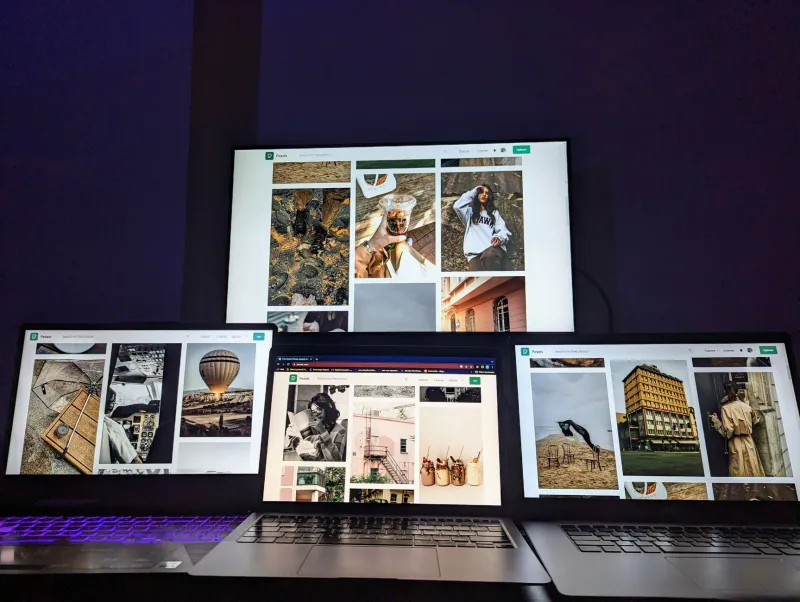
There is a particular kind of frustration that every working designer knows intimately: you open a stock image library, type in a search term, and find yourself staring at 847,000 results. Forty-five minutes later, you have seventeen browser tabs open, a folder full of maybes, and no clearer sense of which image is right than when you started. The project deadline has not moved. Your confidence has.
This is not a productivity failure. It is a structural one—and it is becoming one of the defining creative challenges of the modern visual workflow.
The Promise That Became a Problem
For much of the twentieth century, sourcing quality photography was genuinely difficult. Designers worked with physical stock catalogs, called representatives, and made deliberate choices from a finite set of options. Constraints, while frustrating in their own right, imposed a kind of discipline that actually accelerated decision-making.
The digital era dismantled those constraints entirely. Today's stock platforms—including those offering premium, curated collections—can surface millions of images within seconds of a search query. This was understood as pure progress: more options meant more creative freedom, and more creative freedom meant better work.
The reality has proven more complicated. Psychologist Barry Schwartz identified this phenomenon decades ago in what he termed the Paradox of Choice—the counterintuitive finding that increasing the number of available options does not increase satisfaction or efficiency. Instead, it often produces anxiety, regret, and decision paralysis. What was true for consumer products is equally true, it turns out, for creative professionals navigating vast visual libraries.
What Decision Fatigue Actually Looks Like in Practice
Decision fatigue is not simply feeling tired of choosing. It is a measurable cognitive decline that occurs after prolonged periods of decision-making. The brain, like any other system, has a finite capacity for evaluating options before the quality of its judgments begins to deteriorate.
For designers and marketers, this manifests in specific, recognizable ways. Early in a search session, a professional might thoughtfully weigh composition, lighting, subject authenticity, and brand alignment. An hour into scrolling, those same criteria begin to blur. Choices become reactive rather than intentional—gravitating toward whatever feels familiar or simply whatever appears on the current screen. The result is not the best image for the project. It is the image that required the least additional effort to select.
This cognitive erosion also affects the work that follows image selection. A designer who has exhausted significant mental energy on sourcing arrives at the actual design phase with less capacity for the creative thinking the project demands. The hidden cost of an inefficient image search is not just time—it is the quality of every subsequent decision made that day.
The Scroll That Never Ends
Modern stock platforms are, by design, optimized for engagement rather than resolution. Infinite scroll interfaces, algorithmically refreshed results, and the persistent suggestion that a better option might exist just one more page down all work against a designer's interest in reaching a confident, final decision.
This architecture is not malicious—it reflects the platform's commercial interest in keeping users engaged. But creative professionals need to recognize that the browsing experience itself is working against them. The interface that feels like exploration is, in practice, often a loop: more images, more uncertainty, more time.
The sheer volume of near-identical images compounds this problem. When a search for "professional meeting" returns thousands of results that are compositionally and thematically indistinguishable from one another, the brain is forced into an exhausting micro-comparison exercise with diminishing returns. Differentiating between the forty-seventh and forty-eighth variation of a boardroom handshake is not creative work. It is cognitive noise.
Reclaiming Creative Control Through Intentional Constraints
The solution is not to advocate for smaller image libraries—premium, extensive collections are genuinely valuable when approached strategically. The answer lies in the professional habits and structural constraints that designers bring to the search process itself.
Define before you browse. Before opening any stock platform, document the specific visual requirements of the project in writing: color palette, mood, subject demographics, compositional orientation, and the emotional response the image should produce. Treat this brief as binding. If an image does not meet the criteria on the brief, it is not a candidate—regardless of how visually interesting it might otherwise be.
Set a hard time limit. Allocate a fixed window for image searching—fifteen or twenty minutes for most projects—and treat it as non-negotiable. The constraint forces faster, more instinctive evaluation and prevents the diminishing-returns spiral of extended browsing. Research consistently shows that time-limited decisions are not necessarily worse decisions; they are often better ones, because they rely on more deeply internalized aesthetic judgment.
Reduce results before you review them. Use the most specific search terms possible, and apply filters aggressively before viewing any images. Narrowing 400,000 results to 2,000 through precise filtering is far more efficient than scrolling through the broader set. Most professionals underuse the filtering tools available to them.
Build a curated personal library. Professionals who maintain organized collections of pre-approved, brand-aligned images from previous projects dramatically reduce their reliance on open searches. A well-maintained internal library—even a modest one—provides a reliable starting point that bypasses the paralysis of a blank search field.
Adopt a shortlist ceiling. Permit yourself to save no more than five to eight candidate images per search session. The act of enforcing a ceiling forces comparative evaluation in real time, rather than deferring all judgment to a later review of an unwieldy folder of maybes.
The Case for Curation Over Volume
There is a broader creative philosophy embedded in these strategies, and it is worth naming directly: curation is a skill, and it is one that abundance actively discourages. The most effective visual communicators are not those with access to the most images—they are those with the clearest sense of what they are looking for and the discipline to stop searching once they have found it.
For creative professionals working within brand systems, this clarity is especially important. Brand visual consistency is not achieved through exhaustive exploration of every available option. It is achieved through the development of a refined visual point of view, applied consistently over time. That point of view is sharpened by constraint, not by volume.
Premium stock platforms serve creative professionals best when those professionals arrive with intention. The library is a resource, not a destination—and the distinction matters more than most designers currently recognize.
Conclusion
The democratization of visual content has been, on balance, an enormous advantage for the creative industry. Access to high-quality, professionally produced imagery at scale has lowered barriers and expanded what is possible for designers and marketers working at every level.
But abundance without strategy is just noise. The professionals who will produce the best visual work in the years ahead are not those who spend the most time searching—they are those who have developed the frameworks, habits, and self-imposed constraints to make faster, more confident, and more intentional choices. In an era of unlimited options, the competitive advantage belongs to those who know exactly when to stop looking.