Behind the Lens: What Top-Earning Stock Photographers Do Differently—and What Creative Buyers Can Learn From Them
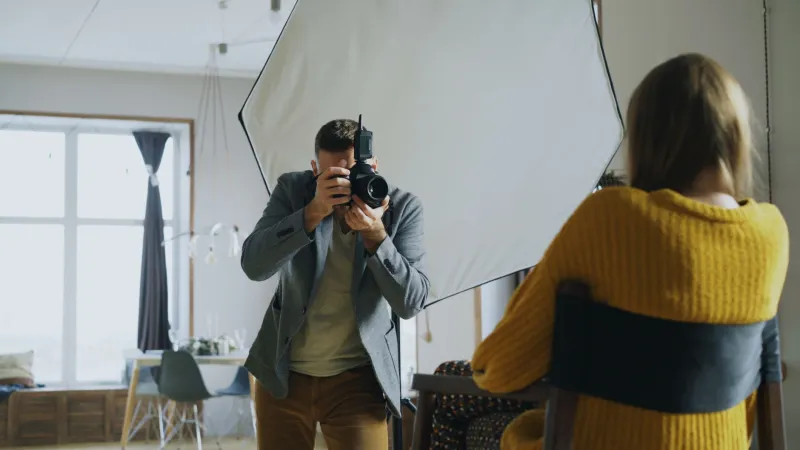
Not long ago, the prevailing assumption in the stock photography industry was that volume was the primary driver of income. Shoot more, upload more, earn more. That model served a certain era well. But the creative professionals purchasing imagery today—brand managers at growth-stage startups, art directors at established agencies, independent designers serving discerning clients—are no longer satisfied with technically adequate photographs that could belong to anyone. They are searching for images with a point of view, a sense of context, and a quality of light and composition that feels considered rather than convenient.
The photographers who have recognized this shift and built their practices around it are the ones consistently appearing at the top of Image123's performance metrics. We spoke with several of them about their creative processes, business philosophies, and the hard-won insights that inform their work. What emerged from those conversations was not a single formula, but a cluster of shared principles that distinguish premium creators from prolific ones.
The Brief Before the Brief: Research as a Creative Foundation
Marcus T., a commercial and lifestyle photographer based in Chicago who has been licensing work through Image123 for six years, describes the early phase of any new project as "building a case." Before he picks up a camera, he spends considerable time studying what creative buyers in his target categories are actually purchasing—not what they downloaded two years ago, but what they are licensing right now and what searches are returning insufficient results.
"Most photographers think about what they want to shoot," Marcus explains. "I think about what someone sitting in a marketing department at 9 a.m. on a Tuesday desperately needs and cannot find. Those are very different starting points."
This market-first orientation does not mean abandoning creative ambition. Rather, it means that creative decisions—subject matter, setting, casting, lighting approach—are made within a framework of genuine commercial relevance. The resulting images feel both artistically intentional and practically useful, a combination that buyers find difficult to resist.
Amanda R., who specializes in food and hospitality photography from her base in Portland, Oregon, takes a similar approach but grounds her research in cultural trend analysis. She follows restaurant industry publications, hospitality design blogs, and consumer behavior reports the way some photographers follow photography forums. "If I know that the hospitality industry is moving toward a particular aesthetic—say, intimate candlelight dining as a counter to the overly bright, Instagram-optimized look—I can build a body of work that meets that demand six months before it peaks. By the time a restaurant group's marketing team is searching for that imagery, my catalog is already there."
Niche Depth Over Broad Coverage
One of the most consistent patterns among high-earning stock photographers is a deliberate commitment to niche specialization rather than broad category coverage. This runs counter to the intuitive assumption that more subjects equal more opportunities. In practice, the opposite tends to be true.
Devin S., whose Image123 portfolio focuses exclusively on imagery depicting small business owners and independent entrepreneurs across diverse American communities, has built what he describes as a "reference library for the overlooked majority of US business culture." His subjects are not the idealized executives of legacy corporate photography—they are the coffee shop owner in Nashville, the electrician in Albuquerque, the boutique clothing designer in Detroit. This specificity has made his work indispensable to a growing segment of brands that recognize their customers do not see themselves in conventional business imagery.
"Generalists compete on price because their work is interchangeable," Devin says. "When you own a niche—really own it, with depth and consistency—you become a destination rather than an option."
For creative professionals sourcing imagery, this principle offers a practical search strategy: rather than browsing broadly, identify photographers whose entire catalog aligns with a specific visual language or subject matter. The coherence of a niche specialist's work often makes it far easier to build a visually unified campaign than assembling images from multiple generalist sources.
Technical Decisions as Storytelling Tools
Equipment choices among premium stock photographers are rarely driven by the pursuit of maximum resolution or the latest sensor technology. Instead, they reflect deliberate decisions about the visual qualities that best serve a particular body of work.
Amanda describes her preference for prime lenses with wide apertures not as a technical preference but as a storytelling choice. "The way a 50mm f/1.4 renders depth and background separation creates an intimacy that tells the viewer they are close to something real. That quality matters enormously in food photography, where the goal is to make someone feel hunger and desire, not to produce a clinical product record."
Marcus has made a conscious choice to invest in lighting equipment that allows him to replicate natural light conditions with precision. "Buyers can feel the difference between authentic window light and studio light that was never quite right. I built my entire lighting setup around eliminating that uncanny quality. It is expensive and time-consuming, but it is also why my lifestyle images license at a premium."
Devin, whose work is often shot on location in working environments with minimal crew, prioritizes portability and adaptability over studio-grade control. His investment is in lenses that perform well in mixed and low-light conditions, enabling him to document real workplaces without disrupting their natural atmosphere. "Authenticity cannot be faked in post-production. You either have it in the frame or you do not."
The Post-Production Philosophy That Separates Premium from Commodity
Editing choices are as consequential as shooting choices in determining where an image lands in the quality spectrum. The photographers we spoke with share a resistance to trend-chasing in their post-production work—a discipline that requires genuine confidence in their own visual voice.
The heavy presets and aggressive color grading that cycle through social media aesthetics can make images feel current for a season and dated within a year. Premium stock photography, by contrast, needs a longer shelf life. Buyers licensing an image today may use it in campaigns running eighteen months from now. Images built on durable, considered editing approaches retain their relevance far longer than those chasing a momentary look.
"I edit for timelessness within a contemporary frame," Amanda says. "That means accurate, beautiful color rendering, natural skin tones, and light that feels like it belongs to the real world. It is actually harder to achieve than a heavily processed look, and it lasts."
What Creative Buyers Should Take Away
For designers, brand managers, and marketing professionals sourcing imagery on Image123, the practices of these top-performing photographers offer more than inspiration—they offer a framework for smarter purchasing decisions.
Seek out photographers who demonstrate niche depth rather than broad coverage. A cohesive, specialized catalog is a reliable indicator of intentionality and craft. Pay attention to the quality of light in an image—not just its technical correctness, but whether it feels emotionally appropriate for your intended use. Examine how an image will hold up over the duration of a campaign, not just how it looks today. And when you find a creator whose visual language aligns with your brand's needs, explore their full catalog. The coherence of their body of work may solve multiple creative briefs simultaneously.
Premium stock photography is, at its core, the product of premium thinking—research-driven, niche-focused, technically disciplined, and editorially purposeful. The photographers who embody those qualities are the ones whose images do not merely fill space in a design. They carry meaning, build credibility, and earn attention in an environment where attention is the scarcest resource of all.
Image123 is proud to host the work of creators who approach their craft with this level of seriousness—and to connect them with the professionals whose projects deserve nothing less.