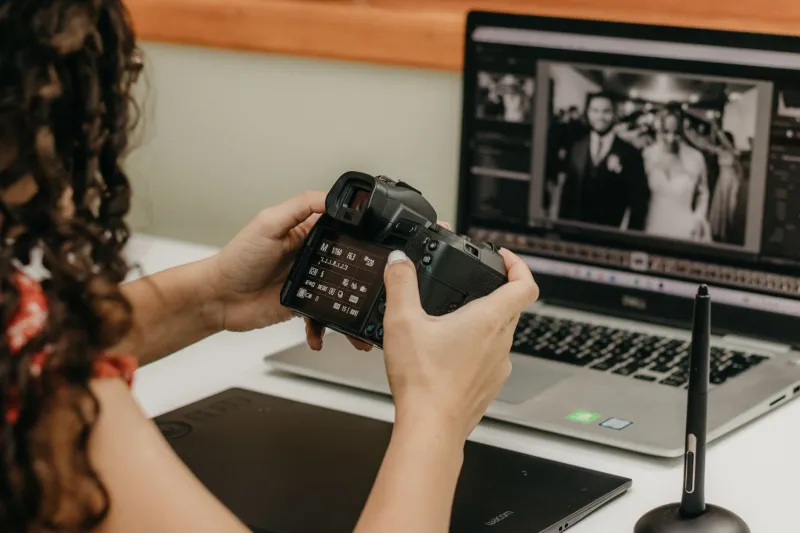
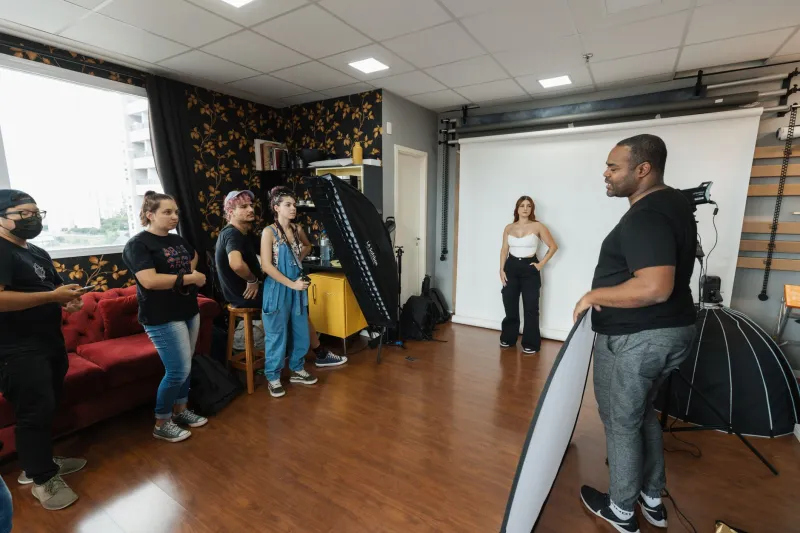
Directed to Feel Real: How Controlled Stock Photography Became the New Standard for Authentic Visual Storytelling
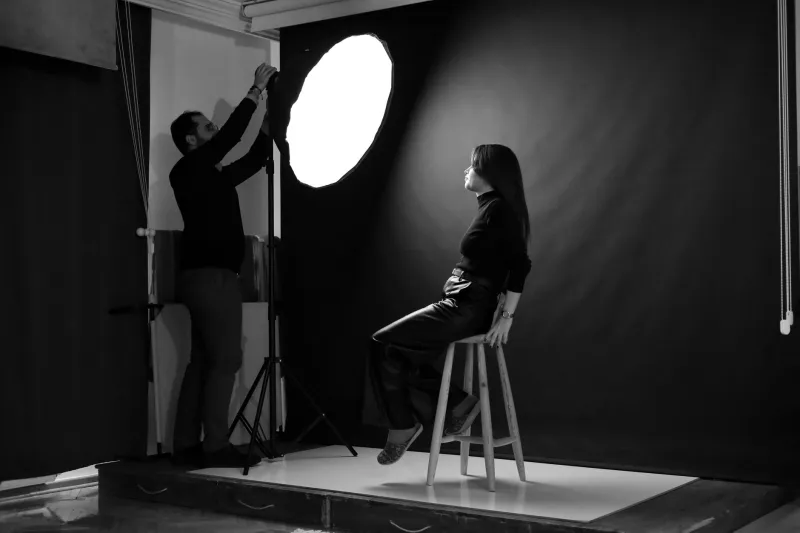
The Candid Ideal and Its Unraveling
For much of the past decade, the dominant philosophy in commercial photography—and by extension, in stock image selection—was a pursuit of the candid. Brands moved away from the glossy, symmetrical staging of earlier advertising imagery toward something that felt more documentary: raw edges, imperfect lighting, subjects caught mid-motion rather than posed for the lens. The underlying logic was sound. Audiences had grown skeptical of traditional advertising aesthetics, and imagery that mimicked real-life spontaneity seemed better positioned to earn their trust.
But something unexpected has happened. Engagement data from across the industry is beginning to challenge the assumption that candid equals credible. In a growing number of contexts, professionally directed stock photography—images that are plainly composed, intentionally lit, and carefully art-directed—is generating stronger audience response than its documentary-style counterparts.
The reasons behind this reversal are rooted in audience psychology, technology anxiety, and a sophisticated creative recalibration that is reshaping how brands think about visual authenticity.
Why Candid No Longer Reads as Honest
The credibility of candid-style imagery has been quietly eroded by two converging developments.
The first is audience sophistication. American consumers in 2024 are among the most visually literate in history. Decades of exposure to advertising, social media content, and branded storytelling have produced audiences who can identify the conventions of candid-style commercial photography as readily as they once identified the conventions of traditional staged imagery. The slightly-off-center composition, the deliberately imperfect lighting, the subject looking away from the camera—these were once signals of authenticity. They have become, for many audiences, signals of a brand trying to appear authentic. The distinction matters enormously.
The second development is the arrival of AI-generated imagery at commercial scale. As synthetic images proliferate across digital media, audiences have developed a new and specific form of visual skepticism: uncertainty about whether any image they encounter reflects a genuine human moment. Paradoxically, this skepticism has not resolved in favor of documentary-style photography. Instead, it has created an environment in which clearly directed, visibly intentional imagery—images that make no pretense of having been captured accidentally—can feel more honest precisely because they do not claim a spontaneity that audiences now know can be fabricated.
The Craft of Controlled Authenticity
What distinguishes the best contemporary directed stock photography from the staged imagery audiences rejected in earlier decades is not the degree of control applied but the quality of human insight that control serves.
The staged photographs that audiences historically found unconvincing were unconvincing not because they were directed, but because they were directed toward idealized, socially aspirational scenarios that bore little relationship to how people actually live, work, or feel. The lighting was flattering to the point of unreality. The expressions were uniformly positive. The environments were impossibly tidy. The direction served an advertising fantasy rather than a human truth.
The directed stock photography that is performing well in current engagement data applies control in service of different objectives. Expressions are coached toward emotional specificity rather than generic positivity—a subject's face might carry mild concentration, or the particular warmth of a genuinely comfortable moment, rather than a broad smile calibrated for maximum appeal. Environments are styled to reflect recognizable real-world conditions: the organized clutter of an actual home office, the imperfect natural light of a real kitchen, the authentic mix of ages and body types present in an actual community gathering.
The control is visible to a trained eye. But the human truth it captures is also visible—and for audiences, that truth is what registers.
Which Industries Are Benefiting Most
The shift toward directed authenticity is not uniform across all commercial contexts. Certain industries are positioned to benefit from it more immediately.
Healthcare and wellness brands have found that carefully directed imagery—showing patients and providers in interactions that feel genuine without the unpredictability of true candid photography—communicates both human warmth and professional competence more effectively than either extreme. The controlled composition reassures without distancing.
Financial services brands, long constrained by the difficulty of making inherently abstract subject matter feel emotionally resonant, are finding that directed photography of real-seeming human moments—families in genuine conversation, individuals in states of recognizable contemplation—builds the emotional connection that candid imagery promised but rarely delivered at scale.
Technology companies, particularly those navigating public skepticism about AI and digital privacy, are discovering that directed human imagery—clearly showing real people in relationship with technology in honest, unidealized ways—communicates more credibly than either glossy product photography or performatively casual lifestyle shots.
Consumer packaged goods brands, where the visual language of lifestyle aspiration has perhaps been most thoroughly exhausted, are using directed photography to reclaim a sense of genuine everyday use that neither traditional advertising imagery nor candid-style stock has consistently achieved.
Selecting Stock Photography for Directed Authenticity
For creative professionals navigating this shift, the practical challenge is identifying stock images that successfully execute directed authenticity rather than simply reproducing the conventions of either traditional staging or candid style.
Several evaluative criteria are useful. Emotional specificity is perhaps the most reliable indicator: images in which the subjects' expressions and body language communicate something particular and recognizable, rather than a generic positive affect, are typically the product of skilled direction applied in service of genuine human insight.
Environmental honesty is another reliable signal. Images that show environments with the kind of selective imperfection present in real spaces—not the chaos of an unstaged location, but not the implausible perfection of a set dressed for traditional advertising—reflect the kind of art direction that produces credible results.
Compositional intentionality without rigidity is also worth evaluating: images that are clearly composed with professional skill but that resist the symmetrical formality of traditional commercial photography often represent the most successful execution of this aesthetic approach.
A New Definition of Real
The authenticity paradox in contemporary stock photography ultimately reflects something true about how audiences construct credibility. Realness, in the visual sense, has never been purely a function of spontaneity. It has always been a function of human truth—whether that truth is captured accidentally or constructed with care.
What has changed is that audiences now bring enough visual sophistication to recognize when constructed imagery is genuinely serving human truth, and when it is merely performing spontaneity. The creative professionals who understand this distinction—and who select stock imagery accordingly—are the ones best positioned to build visual identities that audiences will trust.